


A glass of water in the morning!


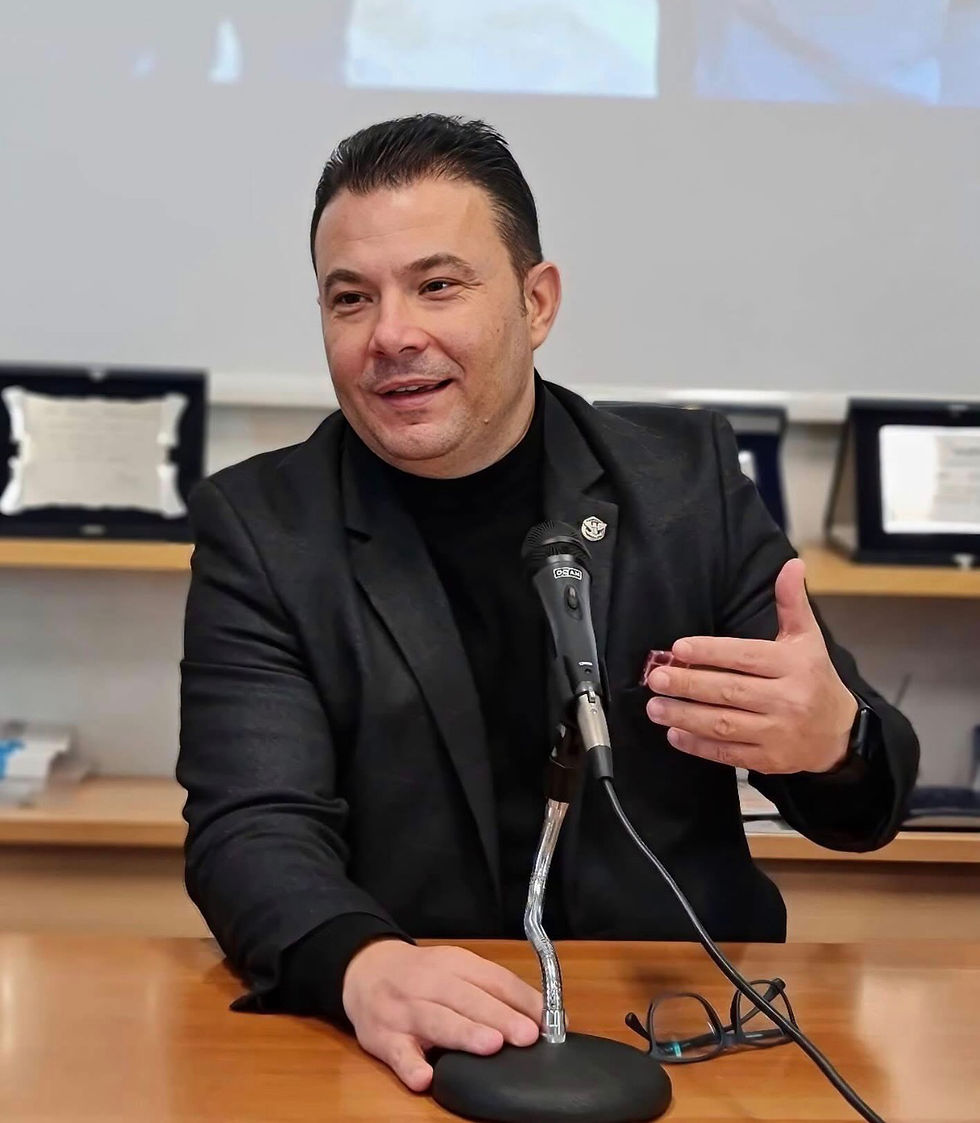
By Arian Galdini
On the hardest mornings, greatness does not come through the door.
It is already there on the table.
A glass of water.
The cold window.
A hand reaches out slowly, not to take hold of the day, but to discover whether, deep within, anything essential in him still survives.
That is where the trial begins.
Not in promises. Not in victories.
Not in grand words.
There, where everything has narrowed to an ordinary object and a single small movement, it is decided whether something in him still holds.
It is natural enough to love the world when it gives way. When it opens.
When it brings honor, love, health, stillness, lucid days that do not gnaw at the soul from within.
Then no one is tested. One is simply glad.
The test begins later, at that edge where comfort is taken from your hands and still you refuse to sink beneath your own inward height.
The house falls silent.
Hope does not go out. It gathers itself in.
Then the question is no longer whether you will endure.
The question is whether you will remain true.
This is where mere continuance parts company with life.
To go on is a matter of breath.
To be truly alive is a matter of character.
A person may eat, work, move, speak, even laugh, and yet already have begun to recede from himself.
He may become habit, role, function, noise, without remaining a center any longer.
Alive is the one who does not let the inner life be drafted into the service of exhaustion.
Alive is the one who, even under the blow, does not let himself become an instrument of fear.
Alive is the one who does not give the world the right to reduce him below his own measure.
Our age makes this harder.
It reads a person from the outside and measures him by pace, appearance, achievement, price, and by the speed with which he can present himself as victorious.
Strength has become advertisement.
Stillness has become image.
Success has become obligation.
Weakness has been driven into hiding, as though it were shame.
Thus one of the coldest lies of the age is born, that only what shines has worth.
But what shines is not always what lasts.
No one is tested while walking on a carpet already laid.
The test comes when the ground shifts beneath his feet and he refuses to sell his center for an easier comfort.
That is why pain is not always an enemy.
Some blows bring a person down.
Some blows reveal.
They reveal how little many of the things the world calls great are really worth.
They reveal how exposed every human being is and, for that very reason, how great one may yet become.
Not every breaking is ruin.
There are breakings that strip away the lie, burn off the excess, pull down the theater, and leave only what cannot be taken away without bringing the whole structure down with it.
Then it becomes clear that the core was never what had been added from outside, but what remained when nearly everything else had drawn in and fallen away.
That is where character begins.
No one becomes fully human by being happy.
One becomes human by remaining true under weight.
Great civilizations have not honored only those who won.
They have honored those too who lost much and still would not sell the soul in order to be spared more easily.
For the measure of a person is seen in what he keeps when he loses.
You may lose wealth, name, love, circle, health, safety, and still not be ruined, if you have not lost the source your light comes from.
To remain alive is to guard that source.
People do not collapse only when bread is lacking.
They collapse when they lose reverence for the dignity of the human being.
When a person is seen only as a number, a tool, a body to be used, an energy to be drained, a vote to be counted.
A world may be rich, swift, refined, flooded with artificial light, and still remain poor at the center if it no longer knows how to recognize the greatness of the one who suffers, who endures, who does not shout and still does not break.
This truth has an Albanian form as well.
Not as ornament, but as the inward law of dignity.
There is an old greatness in the soul of a people that has known deprivation without consenting to become deprivation itself.
For us, to be alive has never been merely a matter of breath.
It has been a matter of honor.
Not becoming smaller than your poverty.
Not letting pain teach you the language of abasement.
Not allowing evil to make you small.
A people remains alive not only by the history it tells, but by the way it keeps its face under burden.
And yet endurance alone is not enough.
Love is required too.
Not easy love, not a sentimental peace with whatever happens, but a riper love, to call life worthy even when it does not spare you.
This is not blind adoration.
It is an act of will.
It is the refusal to declare life worthless simply because it has wounded you.
It is the yes given to life not when it is gentle, but when it is heavy and still has not lost the right to be loved.
No one stays alive by himself alone.
He is held there too by the presence of the other who does not let him come apart.
There is a hand that does not take the pain away, yet keeps your dignity from collapse.
There are eyes that, by seeing you, remind you that you are still human and not only a wound.
There are words that do not mend the world and still keep you in it.
Friendship, at its highest pitch, is not an adornment of life.
It is the safekeeping of another’s dignity.
And there everything comes once more into the light, not as success, but as trustworthiness.
At bottom, to be alive is a metaphysical act.
For life is not merely a succession of days.
It is the question of what a person does with the time placed in his hands.
You may move through it as a passerby.
You may spend it as merchandise.
You may fill it with little things until you can no longer hear anything in yourself.
Or you may take it as a call.
A call not to sell your conscience.
Not to lower yourself merely in order to live more easily.
Not to turn the heart into a storehouse of fear.
That is why life, even when struck, may remain great.
Not because it is easy, but because it still leaves you the chance to be worthy.
In the end, everything narrows to a single scene.
The morning is cold.
The light comes in thinly.
The day promises nothing.
The glass of water waits on the table.
The hand reaches out.
There is no hymn. No glory.
No spectators.
Only one small, heavy movement, the simplest object in the world awaiting a hand that refuses to fall.
The glass is lifted. The lips touch it.
The water is drunk.
In that poor gesture, voiceless, undecorated, without comment, darkness cannot take everything, because the core does not give way.
Nothing becomes great by being perfect.
It becomes great by remaining open to meaning even after it has been struck.
No one is honored only for being strong.
He is honored for remaining true.
No one becomes worthy because he never falls.
He becomes worthy because he refuses to live bent in spirit.
To be alive is far more than merely still being here.
It is refusing to give the world the right to drag you below your inward height.
It is keeping a summer alive within winter.
It is refusing to call the light a lie simply because the night has lasted longer than you wished.
It is knowing that life, even when it leaves you with nothing in your hands, still leaves you one decisive thing, the possibility of not becoming a stranger to yourself.
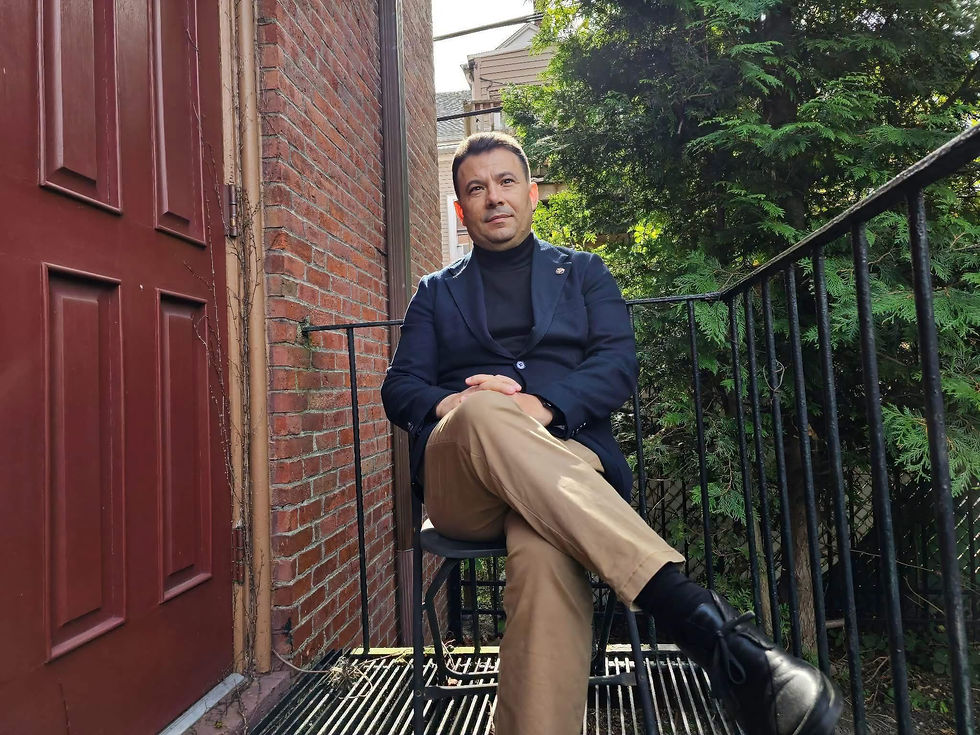
Arian Galdini

Comments