


The right to be born politically!


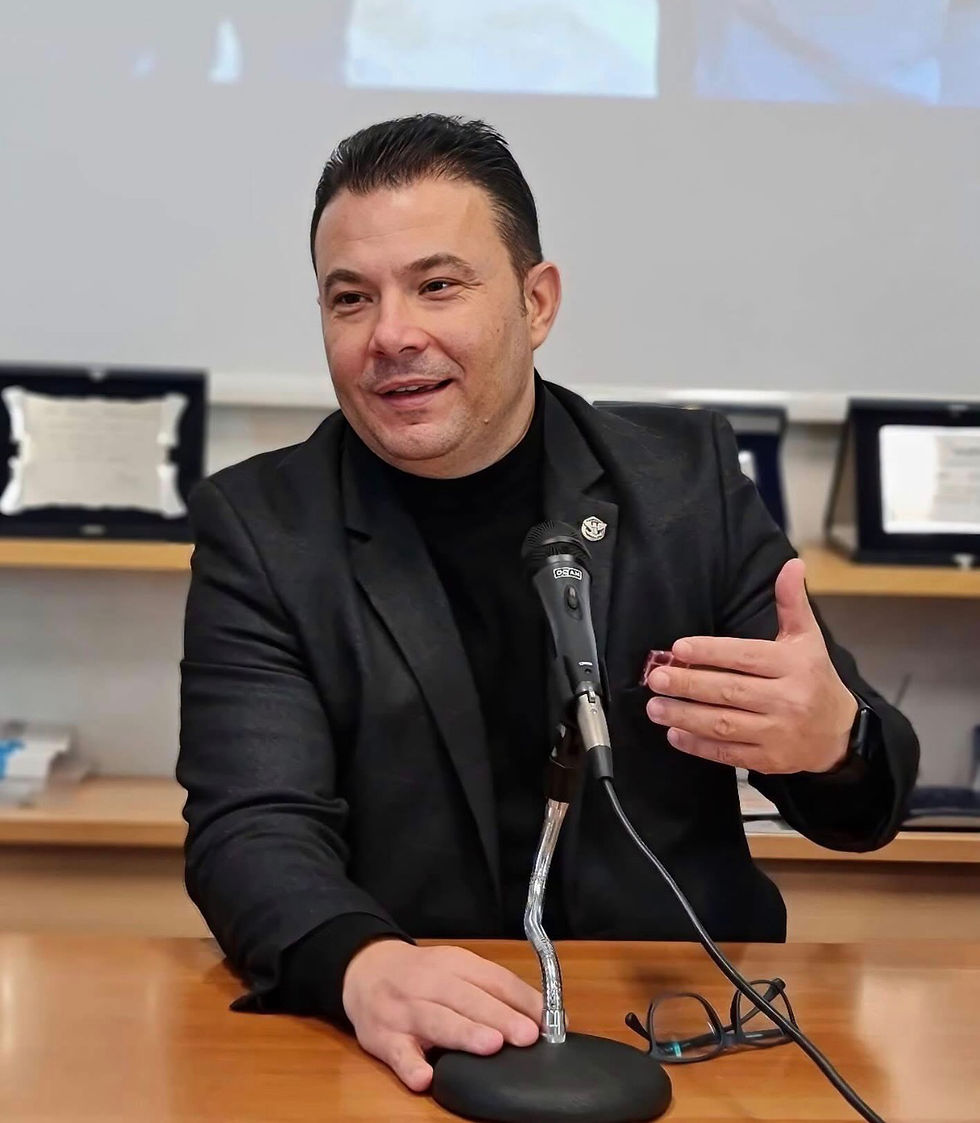
By Arian Galdini
Albania has suffered not only from bad elections.
It has suffered from guarded entrances.
It has paid for votes counted badly, but also for voices never allowed to reach the vote at all.
It has paid for unjust governments, but also for political possibilities sealed off before the citizen could test them for himself.
At many turning points in our public life, power has not merely guarded the result.
It has guarded the road to the result.
It has not controlled only the seat.
It has controlled the door.
This is one of the oldest wounds of our Republic, permission dressed up as order.
That is why every electoral reform must be judged below the surface of its formula.
A reform is not made democratic by the language it uses.
It becomes democratic by the political life it opens.
It is not measured only on the day the vote is cast, nor only at the hour when the numbers are arranged on a board.
It is measured earlier, in the space where the citizen first learns which alternatives are allowed to appear possible, and which are stopped before they can even become a contest.
In a country where the field is free, a rule may be a measure.
In a country where the field is unequal, the same rule may become a wall.
That is the test of any electoral system, not how fair it sounds on paper, but what it does to the citizen’s actual life, not what equality it promises, but whose way it opens and whose way it keeps barred.
Equality of the vote is not merely arithmetic after the ballot box.
It is equality of possibility before the ballot box.
A vote does not become equal simply because it is counted across a national map.
It becomes equal only when those asking for that vote can reach the citizen without passing through the gate of those who already own the hall.
Even the most orderly-looking system can lose justice when it is laid upon a field where the screen, money, the administration, and inherited names have already claimed attention before the citizen has had a chance to hear.
When the race is moved away from living contact with the citizen and handed back to the old power of display, the formula may promise equality and still cover inequality.
The mechanism may change its name, national proportional representation, open lists, coalitions, electoral administration, the number of deputies.
Each, taken on its own, may sound reasonable.
But all of them must answer the same question, do they widen and deepen the citizen’s space of freedom and choice, or do they merely regulate closure?
A list may open names without opening entry.
A coalition may promise unity while making refuge compulsory.
Electoral administration may clean the table while leaving the field untouched.
Even a smaller Parliament may leave the road to it in the same hands.
All of these can leave democracy with a more orderly form and a narrower birth.
For a long time, Albanian politics has known how to change the forms of permission without surrendering permission itself.
Here lies the question of the threshold.
The threshold is not a matter of number.
It is a matter of power.
In a free field, the threshold may be a rule after the vote.
In a closed field, it becomes power before the vote.
It does not measure only how many followed you. It measures how far you were allowed to reach.
It does not decide only who enters Parliament.
Much earlier, it decides who is allowed to become present in the citizen’s own judgment.
In Albania, power has not always guarded only the vote.
Often, it has guarded the entrance to the vote.
It has done so with different words, different forms, different vocabularies, but with the same old hand, calling order what is essentially controlled permission.
A movement may look small not because the country has no need of it, but because the country has not been allowed to hear it.
It may be fragile not because it carries no idea, but because it has never been given room to stand before the country in its own name.
It may remain outside not because it comes from corruption, but because the entrance has been guarded by those who call themselves the keepers of order.
Do not call darkness what you yourselves have kept outside the light.
Democracy is not weakened when new roads to representation are opened to the citizen.
It is weakened when his discontent is left without form, without institution, and without a door.
A country is not endangered by the birth of new alternatives.
It is endangered when the new, denied an entrance into the institution, is left to wander outside it as anger, as mistrust, as surrender.
Stability is a value when it rests upon trust.
When it rests upon closure, it is only regulated silence.
A country does not become more stable by preventing the new from being born.
It becomes more stable when discontent can become representation, institution, responsibility.
LRE Rinisja knows this not as theory, but as experience.
Not because it seeks an exception from the rule, but because it bears witness to a harder truth, when entry is guarded, the citizen is deprived of one road by which discontent might become representation.
Albania does not need a reform that makes exclusion look orderly.
It needs a reform that opens the field before it sets the threshold, because the citizen is not only a hand that casts a vote.
He is a conscience that judges, a will that seeks form, and a source from which the Republic is renewed.
A country does not become a Republic when the citizen is merely permitted to vote.
It becomes a Republic when the citizen has the right to be born politically.
The threshold, in the end, is not a number.
It is where the Republic reveals whether it trusts this birth, or only those who have long since learned to speak in its name.
A reform that closes this entrance does not heal elections.
It gives the form of law to the oldest fear in our politics, the fear that the citizen, if left free, may bring something else into being.
Arian Galdini

Comments