


Short Story: The key that never found its home…

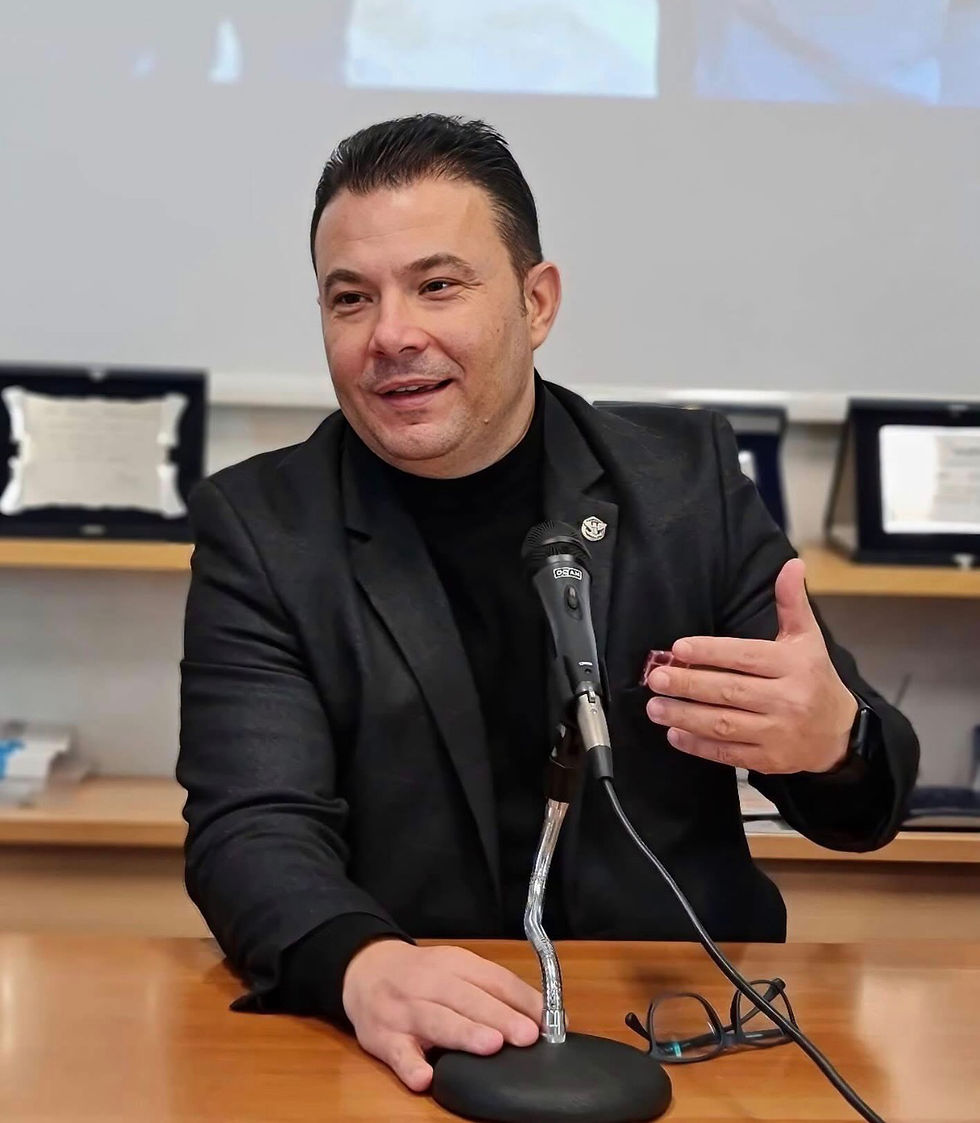
By Arian Galdini
My father’s coat hung on the hallway door, empty, holding his shape.
The smell of damp wool and old cigarette smoke had sunk into the seams, every morning, as I walked past, that scent brought him back to me
without a sound.
I took the coat down.
I worked through the pockets with fingers that searched quietly.
Metal dropped into my palm.
The key was small and heavy, its teeth worn down by time.
In the pale kitchen light it lay on my skin, cold and clear.
Its body was bare of ornament; it carried only the mark of a lock that had once known the breath of a house and a promise kept without words.
I slipped it into my pocket, and the pocket felt deeper than the coat.
I saw the old alley door again, the one my father led me to when I was a child,
down in Tirana’s lower streets where the vine stretched its branches over the fence.
He would touch the threshold with the tip of his shoe, then open it carefully and step inside without haste, with the measured pace of men who know how not to hurt a house.
In the yard a fig tree grew.
On a millstone turned into a table there was always a glass of water.
By the wall, a well covered with a plank
stayed cool.
That house was a finger on the map and a vein in the blood.
That day my kitchen felt like a waiting room
where the visitors had forgotten the address.
Outside, a thin winter rain drifted past, and the windows leaked without shame.
I made coffee, drank it quickly, and set in front of the cup a folded sheet of paper,
yellowed at the corners, found with the coat, a photocopy with a crooked stamp,
its registry number worn down by too many hands.
Along the margin, in my father’s handwriting, one word remained legible: Threshold.
Below the stamp: No. 4827/1.
At noon I went out with the coat on my shoulders.
The bus came overfull, warm with people’s breath and misted windows, voices thinned.
I stood by the door, and at every turn that small piece of metal shifted in my pocket, while on the other side the folded No. 4827/1
sat there, heavy for nothing.
The city knew the route.
I was looking for a threshold.
When I got off, the alley had been straightened, stretched into a clean line for cars with no past.
The houses had folded in on themselves, some with fresh plaster on their facades,
some stripped bare, some turned into bars where music ate the words.
In place of the vine I saw a high, smooth wall
with small cameras hanging from it like black dots.
I stopped.
In front of me a new iron gate rose up, a white plaque on it bearing a surname I did not know.
I touched the iron, it was cold, clean, unscarred.
I took out the key, held it like a relic, and turned it slowly.
Inside the lock, the metal found only emptiness.
Tick.
The red light on the camera blinked on.
Off.
On again.
From inside the yard came a child’s laugh, short, light.
A yellow ball rolled and struck somewhere against the tiles.
A woman’s voice said, “Don’t go near the gate.”
A bag of bread rustled softly.
Steps came up to the iron and stopped.
To my right an elderly woman appeared on the threshold of a narrow house,
wearing a dark apron, her white hair pulled tight at the back.
Her eyes were sharp, trained to recognize faces by their footsteps.
“You’re Berti’s boy,” she said, not as a question, as a stamp.
“I am,” I answered.
She looked at the key in my hand, then at the photocopy under my arm, then at the coat.
“He used to keep that,” she said, “like a bell in his pocket.”
Then, without raising her voice:
“The house became something else.”
I asked with my eyes.
She laid out the pieces in order, an office, three waiting rooms, a counter, a stamp landing crooked on the page, the name of a representative no one on the street had ever seen, a pencil line, to be completed, a damp queue number that stuck to people’s fingers.
My father had gone there once with the same photocopy in his hand.
He had folded it over and over until the page turned to cloth, and when he came home, he left it on the table and never opened it again.
Into that silence he pressed his pride and his exhaustion.
The paper crackled once more.
I opened the photocopy.
In the middle of the page, faded ink and the scratches of notes, a corner darkened by damp, a line rubbed out with an eraser, a fingerprint blurred across the stamp.
No. 4827/1
Subject: data check / _
Note: _
Signature: -
The gate opened from inside with a soft noise, not by my key, but by a remote in someone else’s hand.
A young woman stepped out, in her thirties,
a child on her hip, a bag of bread in her other hand.
She looked at me, then at the key, and her face closed and opened again.
The child, in a red wool hat, reached toward the metal.
“This key comes from a coat,” I said.
She held the child closer, the remote disappearing into her palm.
“We bought this place,” she said.
“With a mortgage. With contracts. With paperwork.”
Then, after a moment:
“In this yard, this child took his first steps.”
I showed her the stamp and No. 4827/1.
At the bottom the signature line lay blank.
The young woman looked at the paper,
at the child, then back at me.
The camera blinked again.
My fingers tightened around the key until its worn teeth pressed into my skin.
The remote clicked.
The gate yielded.
The child’s hand stayed in the air, reaching for nothing.
I opened my own hand and set the key on a small stone at the edge of the pavement,
right where the public street ended and the fenced yard began.
I left it there.
The stone was wet.
I turned away and walked back slowly.
Behind me the red light blinked once more.
Rain kept falling.
Water slid down the white plaque.
My father’s name did not move.
The bus back found me standing in the rain.
The coat grew heavier with water, the inside pocket grew light.
In the window I saw my face split in two, one man on the edge of a home, one man holding himself back from another’s door.
The fog on the glass handed that image to me without mercy.
That evening I sat alone in the kitchen.
The coffee cup left its brown ring on the table, and I laid a blank sheet of paper beside it, a pen laid across it.
I wrote my father’s name, then, beneath it: No. 4827/1.
And stopped.
Between the name and the number
something opened, too wide for ink.
I folded the page, empty of sentences,
slipped it into the coat pocket, and hung the coat back on the hallway door.
On the hook, the coat kept its shape.
Inside the pocket, only air.
Arian Galdini

Comments