


Smoke and fire can make a country readable in the worst possible language


Smoke and fire can make a country readable in the worst possible language.
They travel faster than policy, faster than context, faster than the patient work by which a people becomes intelligible to itself.
They reduce a living nation to a single caption, and captions do not have room for dignity.
The tragedy is not only how the world misreads such images.
The deeper danger is what the images train at home.
Not doctrine as a lecture, but instinct as reflex, the quickest way to be heard becomes the quickest way to become ungovernable, the quickest way to win attention becomes the quickest way to make order look weak, the quickest way to escape responsibility becomes the quickest way to set the room on fire and let everyone argue about the smoke.
Politics is only the surface where a more intimate collapse becomes visible.
What collapses is the shared measure that keeps conflict human.
A society can survive sharp disagreement, it cannot survive the long schooling of contempt.
Once contempt becomes ordinary currency, the person begins to disappear behind the argument.
People become props for performance, and performance begins to feel like proof.
The first signs are rarely dramatic. Responsibility drifts out of the light. Correction starts to sound like betrayal.
The public word outruns its own meaning, and then outruns its own consequences.
Trust does not shatter, it loosens, bolt by bolt, until it no longer holds.
In that climate, the country does not necessarily become more evil.
It becomes more usable, easy to move, easy to provoke, easy to divide, because nothing is heavy enough to slow it down.
A double measure then takes root without being declared.
One reality for those who belong, another for those who don’t.
One standard for the protected, another for the exposed.
The flag remains one, the daily assumptions begin to split.
Neighbors stop expecting the same law to mean the same thing.
Citizens stop expecting the same sentence to carry the same weight.
That is how a people can stay formally united while becoming morally separate.
Violence is never only an event in the street.
It is an education. It trains appetite.
It trains the hand.
It trains the imagination to reach first for spectacle, because spectacle pays immediately.
It arrives with a ready excuse, a crowd already warmed, and permission that no longer feels like permission because it has started to feel like “what works.”
The most dangerous part is not the flames themselves.
It is the habit that forms around them.
The Pact of Wisdom is a refusal of that habit. It is not softness.
It is firmness joined to mercy, the kind of strength that will not purchase victory with another person’s humiliation, and the kind of mercy that will not call permissiveness “peace.”
Mercy is what keeps firmness from enjoying its own power.
Firmness is what keeps mercy from dissolving into sentiment.
Joined, they make something rarer than anger and more durable than fear, justice without losing humanity.
The Pact returns public life to one demand, a public word must be able to answer for itself.
The sentence worthy of public life is not the one that travels farthest or burns brightest.
It is the sentence that can be questioned without changing its meaning, the sentence an opponent can repeat without turning it into a lie, the sentence that refuses the cheap pleasure of dehumanizing the person it contradicts.
Where that standard holds, speech stops being treated as performance and begins to carry the weight it claims.
Behind every public eruption sits a small moral scene that rarely becomes news.
A ready-made sentence rises, clean, flattering, sharp enough to wound and easy enough to share.
It comes to the edge of the mouth and waits there, almost weightless, because it promises immediate reward, applause, a shared enemy, a feeling of righteousness that costs nothing.
Then a different strength intervenes, not the strength that wins the room, but the strength that refuses to treat a human being as raw material for a moment’s victory.
The sentence is held back.
Not from fear, not from politeness, but from measure.
In that pause, the other person remains visible, and public life keeps one of its last protections against becoming a crowd.
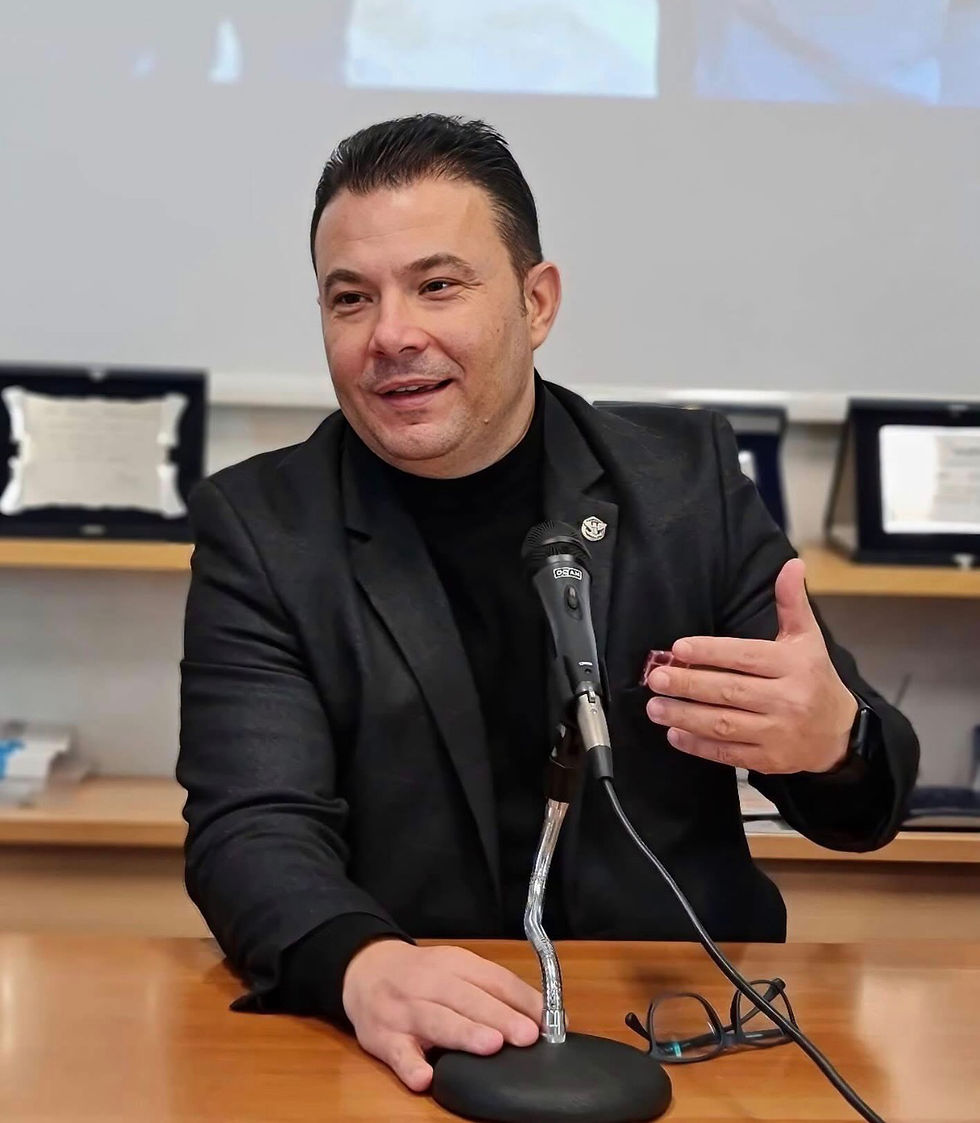
This is the point of my civic effort as Arian Galdini, meeting citizens face to face, not to compete with spectacle, but to rebuild the shared measure that makes freedom livable.
Albania does not become free by proving it can burn.
Albania becomes free when it no longer needs fire to be heard.
I do not accept the education of a nation into a reflex of destruction, as though dignity were optional and restraint were naïve.
I do not accept a future where international headlines teach our children what politics is supposed to look like.
A different Albania is possible, not as branding and not as fantasy, but as a form of life, one standard in public, one measure for power and for citizen, one kind of seriousness that does not require cruelty.
Peace, in that sense, is not a mood.
It is a discipline, an agreement to keep conflict inside the bounds of human recognition, so that truth can be spoken without becoming a weapon and correction can happen without becoming revenge.
Fire can make an image.
Wisdom makes a people durable.
And when a people grows durable, the match no longer has an audience.

Comments