


The Çam Question: When truth demands a record, a name, and a deadline!


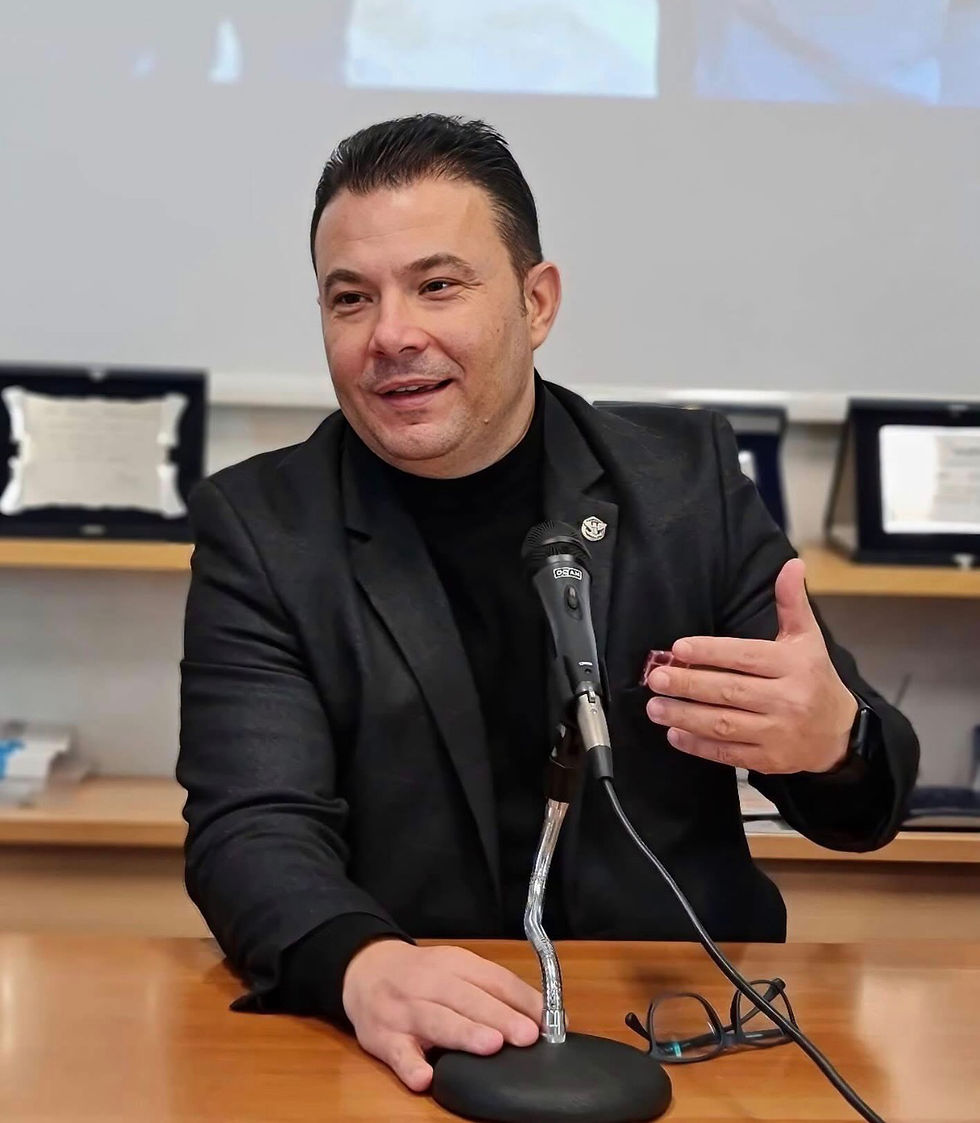
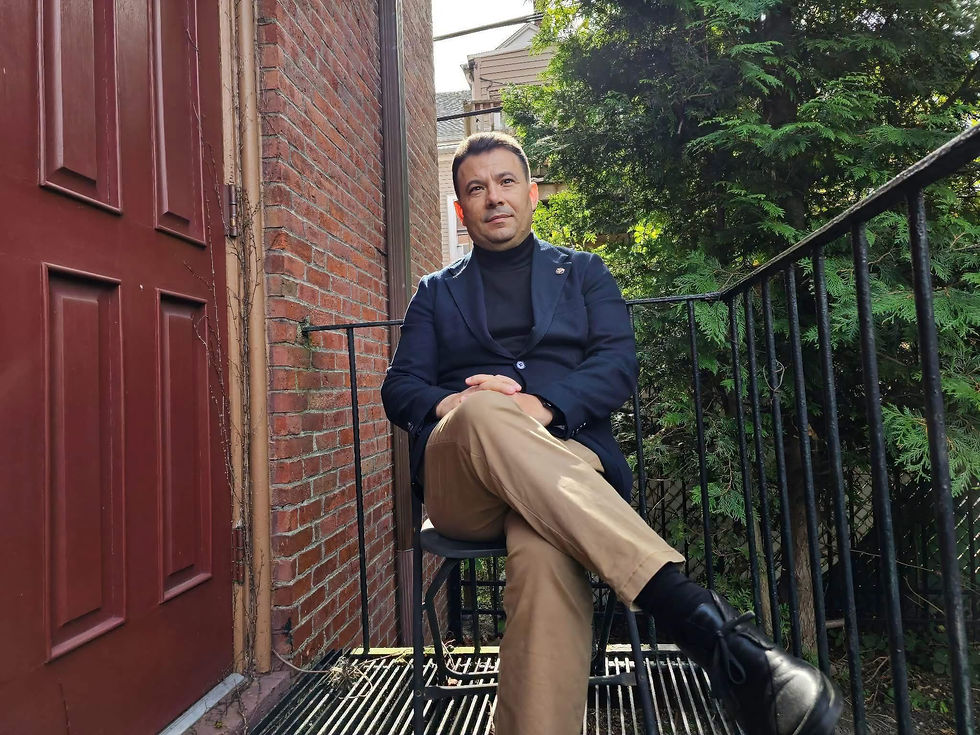
By Arian Galdini
A seal on paper. A date that does not bend.
A name that does not hide.
A deadline that keeps the state from evading its duty, with full responsabilities.
This is not a flourish.
It is the hour of law, the moment power stops being a voice and becomes an answer, when words step down from the podium and into the office, when a citizen stops pleading and begins to demand on equal standing.
“Within full responsabilities” means, no waiting that never ends, no unguarded door, no forgetting elevated into a method of rule. It means a written reply, dated, signed, answerable, attached to a name that can be held to account.
Çamëria is our hardest test, because it asks, simply by existing, what kind of people we choose to be, a people who keep pain as story, or a people who turn pain into a claim that can be read, proven, and judged.
When a cause refuses the discipline of the record, when it carries no name, no deadline, no accountable person, it flares, then dies out, and never becomes a road.
Pain without a road builds two prisons, bottomless weariness, and anger with nowhere to go.
In the prison of weariness, the wound turns to dust, in the prison of anger, the wound turns to a club.
Either way, justice is what is lost.
Here, clear Albanian speech has a duty, never timid speech.
Çamëria is the right of the indigenous Albanian community of Çamëria, Albanians expelled from their homeland, stripped of property, struck with convictions in absentia, and often prevented even from seeing their birthplace, at the border, at the gate, on the road, at the graves.
This barrier is not only yesterday’s wound.
It is today’s obstruction, keeping an Albanian community severed from its own root. (Materials submitted to UN mechanisms have referenced obstacles and refusals of entry, as well as restrictive treatment affecting Çams and their descendants.)
I write this as a citizen, as a parent, as an Albanian, bearing moral weight, respecting fact, seeking a peaceful remedy, and holding a Western horizon.
Victory here is not triumph over another.
It is the return of right into a form that can withstand criticism, withstand time, withstand the court.
The past calls us not to lie.
The present calls us not to scatter.
The future calls us not to become a shout.
And the last word, in any worthy culture, is responsibility.
Çamëria has many names. Yet it also has one name that carries it like a long burden: Servet Mehmeti.
He came to Albania as a child, raised by a mother who clothed poverty in Çam songs and sealed a sea of tears behind a smile.
His life became one question, “Why am I far?”, and that “why” is no whim.
It is a silent verdict on the world.
Servet does not ask for revenge.
He asks for the shore. He asks for the grave. He asks for the threshold.
He asks that memory not be treated as guilt. And when he hears “Çamëria does not exist,” he feels as though he is being told: “You were never born.” This is denial in its coldest form, denial of a person, not only of a subject.
That is why the question, How do Çams obtain documents in archives when entry is blocked?, is a question of state, not of style. Where a person cannot cross the border, right is not measured in footsteps, it is measured in filings, in stamped requests, in written replies.
Where a person is not allowed to touch the threshold, their state must know how to touch the law.
Otherwise “the archive” remains a comforting word, useful only to the one who wants to stretch waiting until waiting begins to look like fate.
In one of those winters at war’s end, a small boy, let us call him only “the boy”, kept in his pocket the key to his home.
The key was small, but it carried the weight of a whole world, a courtyard, trees, the smell of bread, a mother’s voice, a father’s step.
The caravan moved toward the unknown, there was no time to take possessions.
They took only what keeps a human being human, a few clothes, a few documents, a little pride.
Years passed. The boy became a man.
When he returned, as those return who do not want blood, but light, he found a new fence, a new owner, a new paper, a new silence.
The old key opened nothing, from that moment, it was proof, not entry.
He held it in his palm and understood that, in the modern world, a door is no longer wood. A door is writing.
And here the drama of right begins, when the key remains without a door, to whom does the door belong?
Let it be said once, plainly, so the center holds, the key is memory, the door is the right, the written record is the path between them.
When the path is missing, the key becomes a relic and the door becomes denial.
When the path is built, memory does not turn into hatred, it turns into a road.
Here no blurred language is acceptable.
The Çams are not “mere Albanian speakers.” They are Albanians of Çamëria, indigenous to that region, with lives, work, families, property, customs, songs, and graves, long before today’s border disputes.
A word that shrinks identity in order to make denial easier is a soft knife, it does not cut with noise, it drains you slowly.
We do not have the luxury of shrinking ourselves.
We have the duty to be precise.
The events of 1944–1945 against the Albanians of Çamëria have been described by various authors as a combination of violence against civilians, mass expulsion, plunder and confiscation of property, convictions in absentia, and the denial of return.
The heavy fact is this, an Albanian community was severed from its ancestral lands and pushed beyond the border in a climate of fear and violence.
Yes, under occupation there were individuals who aligned themselves with occupiers, as has happened in many places and many communities.
But what happened to Çamëria was not the punishment of those individuals.
It was a blow against an entire Albanian region.
When punishment becomes collective, justice slides into revenge.
This is where patriotism is measured, by a standard, not by a slogan.
Does a people dare to demand its right without selling its soul to injustice?
Does it dare to defend Çamëria while defending law itself, because only law can compel the world to listen?
And standards are what remain when the flags come down.
That is why language must be both restrained and strong.
Some words carry a legal threshold no essay can cross, only an international judgment can. “Genocide” is one of them.
To use it as a battering ram against diplomacy gives the other side an easy shelter: “propaganda.”
This does not mean softening the pain.
It means protecting the cause.
The cause grows stronger when it speaks in words that stand in a file, forced expulsion, violence against civilians, confiscation of property, loss of rights, absence of an effective avenue of appeal, denial of return.
And yes, wars produce innocent victims everywhere.
Yet something more than “war dust” happened to the Albanians of Çamëria, settlements were emptied, doors were closed, property was seized, return was denied.
This is not a gust history can blow away.
It is policy, and it still demands a just remedy.
Here plain speech is required: denial has been treated as policy.
And denial is sustained by a cold instrument, blocking entry or obstructing entry for people connected to Çamëria.
When a community is not allowed to touch graves, houses, property, archives, denial becomes easier, because the barrier makes proof harder.
That is why the question “How do Çams obtain documents in archives?” is not rhetoric.
It is a test of reality.
And the answer can remain peaceful while staying firm, Albanian in will, Western in method.
Three clear, peaceful, workable paths
1) Legal representation inside the territory where the archives are held
When the border becomes a wall, the West has an answer, representation by law. Archives, land registries, courts are not reached only by the body, they are reached by authorization, by counsel, by formal requests, by administrative and judicial channels. When a person cannot enter, the written request enters.
2) A written trace of every refusal
Every turn-back, every ban, every obstruction must become a document, who refused, why, under which act, on which date. A refusal without writing is fog. A refusal in writing becomes evidence.
3) Internationalizing proof, not noise
When obstruction becomes a system, the issue must leave anger and enter the realm of standards, freedom of movement, the right to property, the right to appeal, the prohibition of unjust discrimination. A small state wins by making its case readable to the world, not by raising its own temperature.
This is the mature Albanian, the one who does not abandon his right, but demands it through the means that make it audible.
When wartime laws cast shadows over today’s property, the word “history” is not enough.
A mechanism is needed. “Enemy property” is not metaphor, it is a category that can produce freezes, administrations, restrictions.
In Albania–Greece relations, public debate has often returned to the “law of war” and its consequences for property rights.
In 1987, many public sources note that the state of war was politically closed, yet parts of the debate have persisted around practical effects and legal remnants.
Here is the cold sentence, political closure without practical clarity keeps a delayed conflict alive.
Practical clarity is peace put into writing.
And when fog persists, it does not fall on chairs. It falls on people like Servet.
On the boy with the key.
On the family that once had a home and now has only memory.
Here is the heart of the peaceful road, property and an avenue of appeal. In the Western order, property is not merely a thing; it is security in life, continuity for the family, a space of freedom.
When deprivation is unjustified, society learns fear as habit.
When appeal is impossible, society learns submission as “wisdom.”
So the hardest turn is required, from collective abstraction to a documented individual case.
Europe recognizes the individual as a subject of right.
That is why, instead of grand slogans, a portfolio of provable cases takes shape, chain of title, origin documents, inheritance acts, registries, evidence of use, proof of confiscation or of the impossibility of possession, and a clear map of the avenue of appeal.
In the language of the European Convention on Human Rights, this connects directly to the protection of possessions in Protocol No. 1, Article 1. Greece’s Constitution also protects property (Article 17). And in European practice, historic property wrongs are addressed through physical return, financial compensation, or a combination of both. Çamëria asks for nothing beyond that standard, entry into the line of rights, not a place in the line of exceptions.
Let the reader see an image, not a citation:
A records room. Fine dust on files. A wooden table worn down by elbows of reading. An elderly man who takes from his pocket a letter folded four times. A legal adviser who opens it slowly, flattens it with his palm, and traces the lines with his finger. No voice rises. Only paper speaks.
Here a distinctly Albanian idea is born, strong and workable: the Parcel File.
Each claim should not be “Çamëria” floating in air, but a numbered case: parcel number, map reference, chain of title, preserved documents, strict legal translation, and a one-page legal summary in Albanian, Greek, and English.
Such a file does not ask to be believed.
It asks to be read.
And so it does not remain a slogan: one hundred test cases.
One hundred complete files, prepared with order, translated with precision, ready for any mediation table and any lawful route available.
Not because all will be won, but because it proves the cause has entered the age of evidence.
And evidence is the only currency that turns history into justice.
Here it is said without adornment, Albania, too, has often used Çamëria as a big word in speeches and as a small sentence in work. Calls without files.
Declarations without deadlines.
Sparks without a path.
That has wounded the credibility of the cause itself.
And this fault has been felt at tables where the word grew faster than the document.
This does not change what happened.
It explains today’s delay.
And delay, for an expelled person, is a second wound.
But there is also a voice that keeps the cause clean, the voice of an elderly Çam woman who says, “I don’t want my grandchildren to hate. I want them to know the law. I want them to remember history. I want them to live peacefully among people.”
This is high patriotism, defending truth without selling the soul to hatred.
Çamëria can be advanced only with Western form, evidence, legal routes, an avenue of appeal, named responsibility.
Five clear pillars, Albanian in aim, Western in method:
1. A standing evidence team: verification rules, regular publication.
2. A portfolio of individual property cases: case by case.
3. Practical clarity: removing gray zones with precise language.
4. Dialogue with output: minutes, deadlines, countable results.
5. Unshakable ethics: no collective punishment, no humiliation.
Two tools:
• An open registry of documented claims.
• A legal translation house (Albanian–Greek–English).
Three strong, workable, peace-minded ideas:
• A trusted mediation fund: individualized solutions, case by case, administered through a credible third party.
• A commission for archival transparency: publication rules, transparent methodology, deadlines.
• A doctrine of individual responsibility: individual judgment, proof, standard, no community locked behind the door of collective guilt.
In the language of work, this can be read as a medium-term path: Çamëria 2030.
And here it must be said plainly, as a duty of state, the Republic of Albania can no longer treat Çamëria as a “community issue.” Çamëria is a state obligation, an obligation to document, represent, and pursue every case to the end, with law, with translation, with persistence, without noise and without surrender.
Çamëria is not the file of an association.
It is the file of the Albanian state.
Every national cause that seeks a peaceful victory needs an anchor.
Çamëria has its anchor, the written record, signed, dated, answerable, within a deadline.
A people do not win by raising temperature, they win by making the state readable, for themselves, for the other, for the world.
One line can be enough.
In the end, neither shouting nor promises remain.
A single line remains on paper, with a name, with responsibility, with a deadline.
Anyone who has lost a home can read that line better than any speech.
And when that line becomes habit, right is no longer voice, it becomes a door.
Then the key stops being a relic, and once again opens a home.
Arian Galdini

Comments